Survivors Notice Everything.
Including Whether It's Safe to Speak.
People who have experienced domestic violence are hypervigilant about safety and acutely aware of power dynamics. A survey handed over by staff can feel threatening rather than empowering. Pulse For Good offers a private, anonymous way to be heard—on the survivor's terms, with nothing to sign, carry, or trace.
Trusted by domestic violence shelters and family services organizations across the country.
Feedback Tools Built for Other Settings Don't Work Here
Survivors have experienced profound betrayals of trust. Any listening effort that ignores that reality will hear only silence.
Trauma Shapes Trust
Survivors have had their trust betrayed by people close to them. Rebuilding it takes time—and a feedback channel that never asks them to reveal who they are.
Fear of Retaliation or Judgment
When shelter, safety planning, and advocacy all come from the same people you'd be commenting on, honest feedback feels risky. Anonymity removes that risk entirely.
Safety and Privacy Are Paramount
Survivors are acutely aware of who might see what they write. Pulse collects no names, no logins, and no device or location data—there is nothing to trace back.
Children Need to Be Heard Too
Families arrive together, and children experience your programs in their own way. Child-friendly survey options give every member of the family a voice.
Listening Designed Around Safety
Privacy isn't a feature of Pulse—it's the foundation
Across the full Pulse platform:
Listening That Respects What Survivors Have Been Through
Every design decision in Pulse starts from the same question: does this feel safe to the person answering? For survivors of domestic violence, that bar is higher—and it should be.
- Trauma-informed question design — questions written to inform care, never to re-open wounds or assign blame.
- Complete anonymity and privacy — no names, no accounts, no identifying data of any kind, ever.
- Child-friendly survey options — age-appropriate ways for children in your programs to share how they're doing.
- Crisis resource integration — surveys can surface help and resources at the moment someone signals they need them.
Kiosks win because they're always available in the moment of service—and privacy increases honesty.The one-line takeaway from 2.6M+ answers
A Paper Form Handed Over by Staff Isn't a Safe Channel.
A Private Kiosk Is.
Exit surveys ask survivors to hand their honest opinions back to the very people they'd be commenting on. Pulse runs alongside your required evaluations—and hears what those forms never will.
The Paper Exit Survey
- Handed out and collected by staff
- Completed in view of others, or not at all
- Arrives only when someone is leaving
- Feels like paperwork—one more form to sign
- No way to surface urgent concerns in time
Always-On Anonymous Listening
- Answered privately, whenever a survivor chooses
- Nothing to hand back, nothing to trace
- Available throughout someone's whole stay
- Two minutes at a kiosk, on their own terms
- High-urgency comments flagged automatically
Zero Added Work for Your Advocates
No surveys to distribute, no forms to collect, no data entry. Your team keeps supporting survivors—the feedback comes to you.
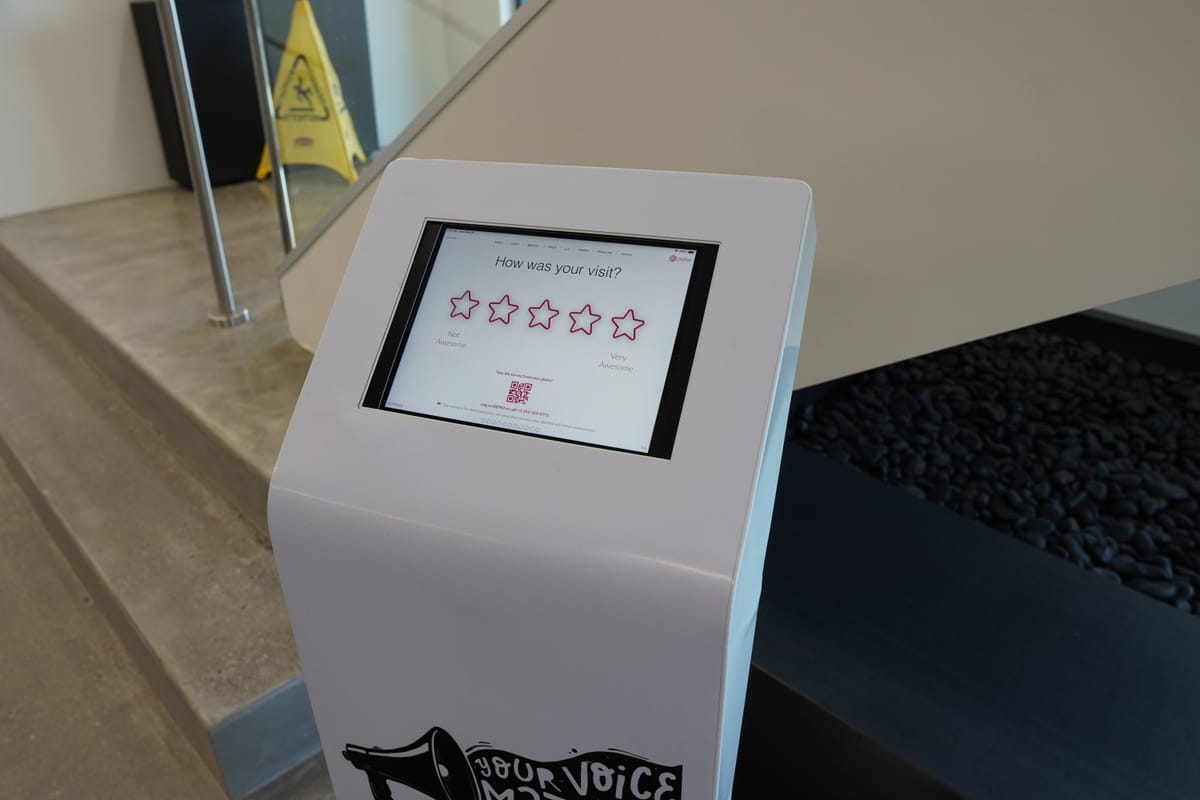
Place a Kiosk in a Private Spot
Shelters, advocacy centers, family resource offices—kiosks sit where survivors already are, available around the clock without an appointment.
Survivors Share Anonymously
No names, no logins, nothing to carry or hand back. Anonymity is what makes honesty feel safe—especially for people watching for every risk.
Urgent Concerns Reach You Fast
Real-time dashboards auto-categorize comments and flag high-urgency items, so your team can respond while it still matters.
Evidence Your Funders and Board Can Trust
Survivor voice is exactly what grant reviewers and boards want to see—and exactly what's hardest to document safely. Pulse gives you a continuous, anonymous record of how survivors experience your programs.
- Federal and state grant reporting — show a working survivor-feedback loop, not just a promise of one.
- Program improvement — spot trends across shelter, advocacy, and children's programs while you can still act on them.
- Board and community reporting — bring survivors' actual words into leadership conversations, without ever compromising their privacy.
- Staff hours saved — feedback is captured, categorized, and dashboarded automatically, with no manual collection or typing.
The people most affected by your programs are the least likely to answer a survey link. A private kiosk meets them where they are.Why on-site, anonymous collection works
What Your Team Will Want to Know
The questions we hear from shelter directors, advocates, and program staff—answered up front.
How is anonymity actually protected?
We never collect names, emails, or contact information, and we don't log device or location data. Results are presented in aggregate with minimum response thresholds so individuals can't be identified—which matters enormously in small programs.
Is this safe for survivors to use?
Yes. There are no logins, nothing to carry, and nothing traceable—anonymity is built into the design, not added on top. A survivor walks up, answers privately, and walks away leaving no record of who they are.
Can the questions be trauma-informed?
Yes. The platform offers full customization within trauma-informed design principles: program-specific questions, a library of validated questions, and conditional logic and branching—so no one is asked something that doesn't apply to them.
What languages are supported?
Over 150 languages, including Spanish, Mandarin, Vietnamese, Arabic, Tagalog, Korean, and Russian. Respondents can switch languages at any point during the survey.
What happens if someone discloses something urgent?
High-urgency comments are automatically flagged and surfaced so the right person sees them quickly. Across the platform, Pulse has detected 5,400+ high-urgency items that might otherwise have sat unread.
What does our IT team need to do?
Almost nothing. Kiosks need a standard 110V outlet and WiFi—cellular connectivity is available on request. Most organizations are fully operational within 2–4 weeks, including platform configuration and staff training.
Get the Family Services Briefing
Research and practical guidance on trauma-informed listening, staff sustainability, and survivor voice—delivered occasionally, no spam, unsubscribe anytime.
Resources for Family Services Leaders
Your advocates carry heavy emotional labor. These resources help you take care of the people who take care of survivors.
Burnout from Emotional Labor
How chronic emotional labor and structural stressors degrade staff well-being and service quality—and how continuous feedback helps prevent it.
Download the white paper AssessmentFeedback Maturity Assessment
Evaluate how your organization listens today—and see what the next level of survivor-centered practice looks like.
Take the assessmentEvery Survivor Has a Story About Your Program.
Make It Safe to Share.
Run a 30-day pilot in one location and hear what surfaces—privately, anonymously, and without adding work for your advocates.