- You’re equating silence with success.
The most dangerous data point in your organization is the feedback you aren't getting. Many nonprofits operate under the "No News is Good News" fallacy, but in a service environment, silence is a symptom of a power imbalance. When clients or donors stop providing input, it’s usually because the "Cost of Speaking Up" (time, effort, or fear of retaliation) has outweighed the "Benefit of Change." If your feedback channels are empty, you haven't achieved perfection; you’ve achieved irrelevance. You must move from being a passive receiver of feedback to an active seeker of friction.
2. You’re only listening to the loudest voices.
Outsized attention is often given to the "Squeaky Wheel" the one donor who sends a three-page email or the one disgruntled client. When you allow your strategy to be hijacked by the loudest 1%, you risk "over-correcting" your mission into a shape that no longer serves the 99%. This creates a culture of firefighting rather than fire prevention. To do this right, you must weigh individual complaints against your core data. If you change your entire workflow to please one critic, you might find you’ve accidentally alienated your most loyal supporters.
3. You’re dismissing anonymous voices.
There is a common, elitist idea in leadership that "if they won't put their name on it, it isn't worth reading." This completely ignores the reality of the people many nonprofits serve. For a client who depends on your organization for food, shelter, or safety, providing attributed negative feedback feels like a life-altering risk. Anonymity isn't a sign of cowardice; it’s a tool for safety. When you dismiss anonymous data, you are intentionally blinding yourself to the most honest, high-stakes truths about your impact.
4. You’re obsessed with face-to-face meetings.
We often romanticize "sitting down for a cup of coffee" as the gold standard of connection. However, face-to-face feedback is the most socially filtered data you can collect. Most people are hardwired to avoid social awkwardness, leading them to give you "The Polite Lie" rather than the "The Ugly Truth." If your only feedback mechanism is a meeting, you are only hearing what people think you want to hear. Authentic data requires distance. You need to provide low-pressure, digital, or written avenues where people can be honest without having to watch your face drop in real-time.
5. You’re reacting, not responding.
Feedback should inform your strategy, not dictate your afternoon. Many organizations suffer from "Leadership Whiplash," where a single negative comment leads to an immediate, sweeping change in policy. This signals to your staff that your mission is fragile and that you lack a clear North Star. A "response" involves taking feedback, comparing it to your long-term goals, and deciding if a change is truly warranted. A "reaction" is just a reflex. One is an act of strategy; the other is an act of anxiety.
6. You’re hoarding data at the top.
In many organizations, feedback is treated like a performance grade for the Executive Director rather than a tool for the team. When results are kept in the boardroom, the people who actually interact with your community the program officers, the volunteers, the receptionists are left flying blind. They see the symptoms of problems but are never given the "diagnosis" found in your data. True growth happens when you democratize your data. If your frontline staff doesn't know what the clients are saying, they can’t be expected to fix the experience.
7. You’re waiting for a "statistically significant" sample.
The "Data Trap" is a favorite hiding place for leaders who are afraid to make a move. You don't need a 40% response rate to know that your intake process is confusing or that your donor thank-you notes are boring. In the nonprofit sector, qualitative insights (the "Why") are often far more valuable than quantitative data (the "How Many"). If five different people tell you the same thing in a week, you don't need a spreadsheet to tell you it’s a trend. You have enough information. You’re just looking for an excuse to wait.
8. You’re over-indexing on formal surveys.
We have become so obsessed with "clean data" that we ignore the "messy truth." A 20-question survey is a hurdle, not a bridge. The most vital feedback your organization receives likely happens in the comments section of your Facebook posts, in the "P.S." of a donor's check, or in a passing remark made to a volunteer in the parking lot. If your system for "listening" only includes formal forms, you are missing 80% of the conversation. You must learn to value "unstructured data" as much as your Likert scales.
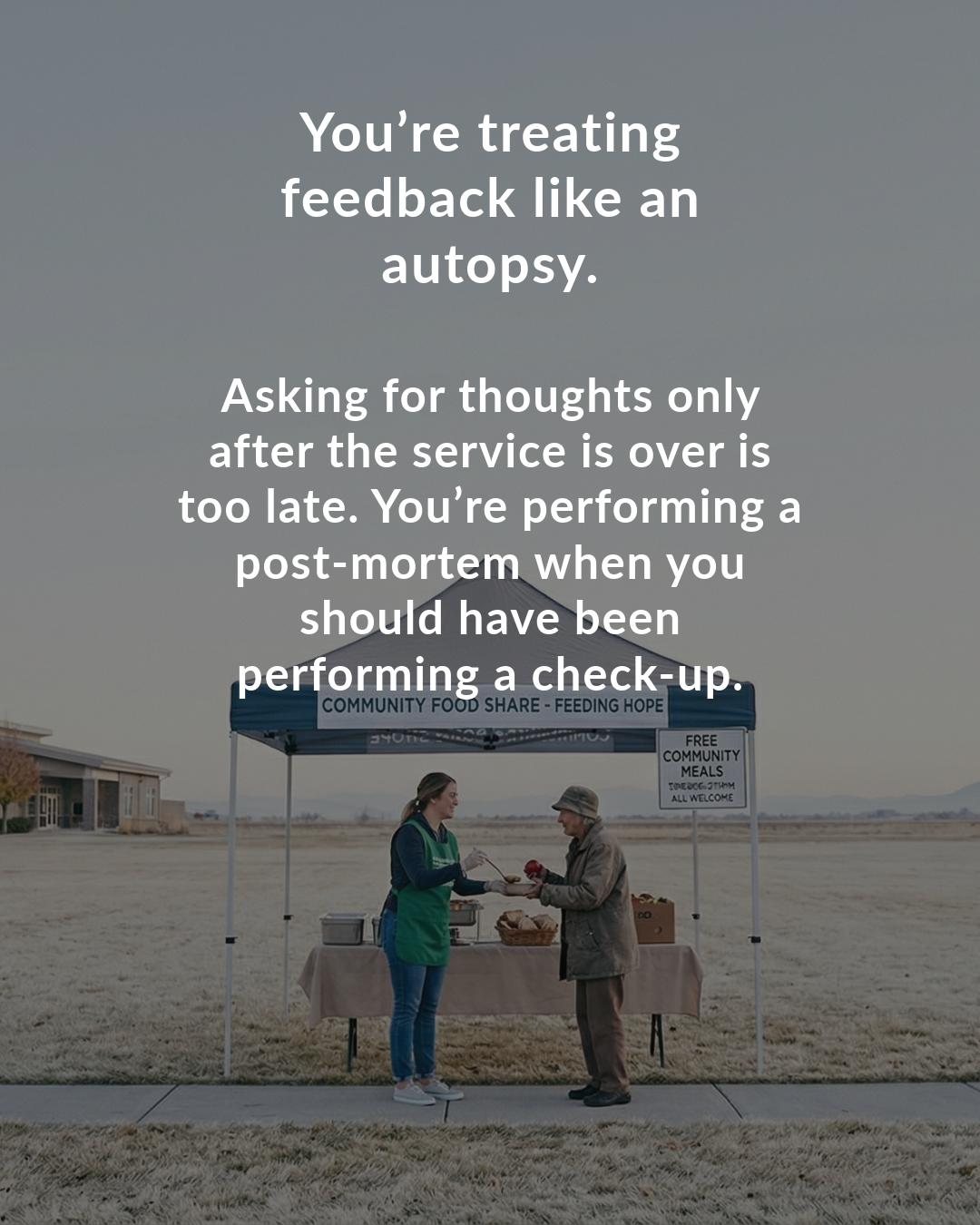
9. You’re treating feedback like an autopsy.
Most nonprofits collect "End-of-Year" or "Post-Program" feedback. While this is great for reporting to grantors, it does nothing for the person currently sitting in your waiting room. By the time you read that feedback, the experience is over and the damage is done. You are performing an autopsy on a relationship that might have been saved with a simple "How are we doing today?" check-in. Real-time feedback allows for "mid-flight corrections," turning a potentially negative experience into a story of how you listened and pivoted.
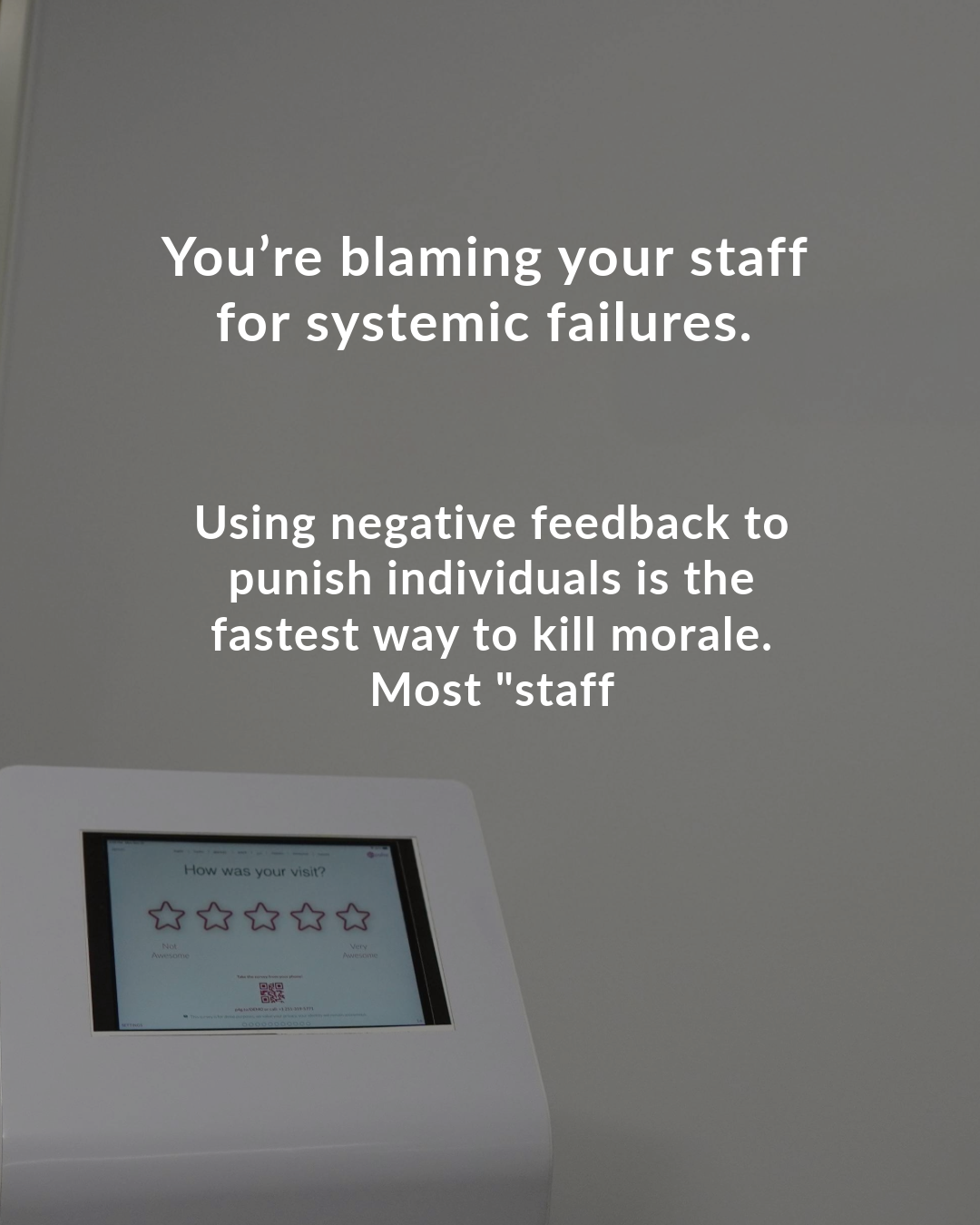
10. You’re blaming your staff for systemic failures.
This is the most common and most damaging mistake in the sector. When a client complains about a "rude" staff member or a "slow" response, management often defaults to disciplinary action. However, people generally want to do a good job. If they are "rude," are they burnt out? If they are "slow," is your software from 2005? When you use feedback to punish individuals, you teach your staff to hide the truth and fear the community. When you use it to fix systems, you empower your staff to provide the excellence you’re looking for.
THE AUDIT CHALLENGE
The next time you receive a piece of feedback, don't ask "Is this true?" Instead, ask "If this were true, what would it say about our current systems?" The shift from defending your organization to investigating your organization is where true impact begins.