Case Studies
Real organizations. Real feedback. Real operational change.
Pulse For Good helps nonprofits and care providers capture honest, anonymous feedback at the moment of service—without adding work for staff.
Always-On Listening at Scale
Platform-wide impact from 250+ kiosks running 24/7
What People Actually Talk About
Pulse feedback isn't vague. It surfaces what's happening inside the building—real operational feedback that drives change.
Emotion Mix
Proof it's not "just complaints"—Pulse captures what people are actually feeling.
Real Organizations Using Pulse
See how nonprofits and care providers are transforming their operations with client feedback.
National Health Foundation
Los Angeles, CA
The Challenge
NHF works in environments where power dynamics can prevent honest feedback—people may not feel safe saying what's real.
Key Insight
"We have a power problem… I have power over every person who comes to our facilities… Pulse For Good takes that away… so our guests can answer questions without anybody knowing who they are."
The Results
Pulse helped NHF capture more detail and address issues early—before they became bigger problems.
"[Pulse For Good] takes the place of a full-time employee and it's way cheaper."
— Kelly Bruno, CEO, National Health FoundationCatholic Community Services of Utah
Salt Lake City, UT
The Challenge
CCS needed feedback that wouldn't just "sit on a desk"—they needed something they could track daily, spot trends with, and use to improve real services.
Key Insight
"What was important… was to not let that information sit on a desk… we needed to use it to track trends…"
The Results
Pulse gave CCS ongoing insight into what clients are dealing with and helped them understand real needs in real time.
"These are things I've been dreaming of doing for years."
— Matthew Melville, Homeless Services DirectorTriumph Treatment Services
Washington State
The Challenge
Staff were serving people dealing with mental health and substance use disorders. Without a safe channel for honest feedback, misunderstandings and frustration can build.
The Results
"It has given the patients a safe way to share serious concerns as well as heartfelt gratitude…"
Triumph is now considering doubling staff in key areas based on feedback insights.
"The biggest value is that our patients recognize that we really do want to hear from them."
— Robin Appling, President of Human ResourcesValley Behavioral Health
Utah
The Challenge
Their previous survey process was manual, slow, and basically disappeared into a shared folder.
Key Insight
"They were done on paper… submitted… typed… stowed in a shared folder drive, and we never saw them again… The data wasn't very good… It was old. It was just hidden away."
The Results
Pulse created in-the-moment feedback that required almost no staff effort to capture or manage.
"It's in the moment data… low effort for the support staff… They just tap on it and it works, and I can read it."
— Melissa Edgeworth, Director of Administrative ServicesThe Road Home
Utah
The Challenge
They needed a way to capture raw, unsolicited feedback from guests without requiring constant oversight.
The Results
"We have been able to directly identify key areas of improvement… improvements to cleaning processes, case management interactions, and front-line staff…"
Feedback helped identify improvements in how security teams were interacting with guests.
"Pulse For Good's kiosks are an excellent tool for gathering direct feedback from clients and guests."
— Dee Norton, Impact and Facilities DirectorMore Case Studies
Explore the full library of partner stories.
 Case Study
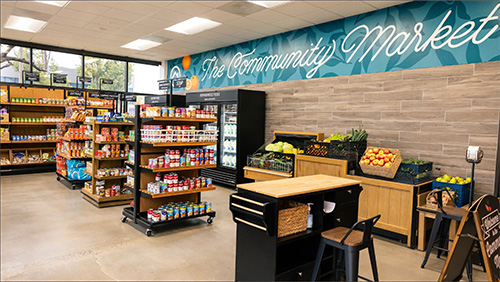
Families Forward's Community Market Inspired from Client Feedback
Families Forward & CalOptima Health
A landscape analysis from January 2025 revealed a significant crisis in Orange County, with 397 total families receiving coordinated entry services and 242 children aged 0–5 experiencing homelessness.
Families Forward, a partner agency of CalOptima Health, is dedicated to preventing and ending family homelessness in Orange County. They identified a critical gap:
Shrinking Resources: Funding for rapid rehousing and permanent supportive housing is decreasing.
The "Upstream" Gap: Many families facing housing insecurity do not qualify for limited government resources until they are already homeless.
 Case Study
Solving Survey Inconsistency Across Meridian Healthcare’s 34 Diverse Programs
Meridian Healthcare
As a behavioral health agency serving 14 counties in North Central Florida with over 34 different programs, Meridian faced significant hurdles in gathering reliable client feedback:
Lack of Randomization: Clinician-led surveys were inconsistent, as some providers were diligent while others were unaware the surveys existed.
Geographic and Programmatic Diversity: Overseeing levels of care ranging from primary care to inpatient and residential treatment required a centralized feedback solution that delivered both high-level organizational snapshots and site-specific performance metrics.
Preserving Anonymity: In residential settings, capturing candid feedback required a system where clients felt safe from staff monitoring.
Leadership Visibility: Senior leadership needed a more efficient way to monitor performance indicators across all sites without relying on manual reporting.
 Case Study
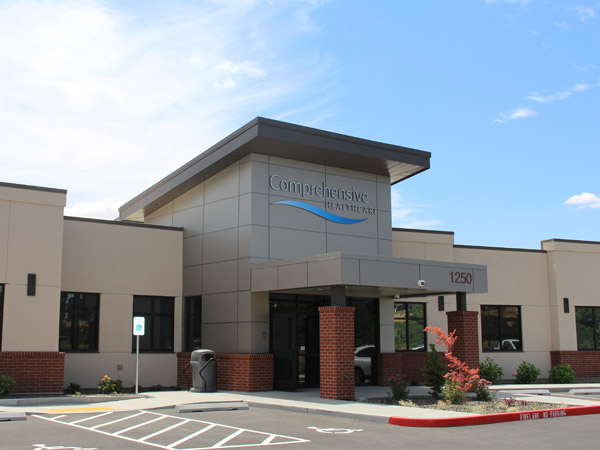
Scaling Client Feedback Across Language Boundaries and Five Counties
Comprehensive Healthcare
Comprehensive Healthcare operates as a large-scale behavioral health agency, providing diverse services—including outpatient mental health, substance use, inpatient treatment, and residential programs—across at least five counties in Washington State. Before partnering with Pulse For Good, the organization faced several hurdles in capturing meaningful client voices:
Low Engagement Rates: Previous attempts to utilize text message and online surveys proved challenging, often resulting in poor response rates from clients.
Data Fragmentation: With multiple locations in cities like Yakima, Ellensburg, Sunnyside, Pasco, and Walla Walla, the agency needed a way to consolidate feedback for both local campus directors and high-level board reporting.
Language Barriers: Manually translating Spanish comments was time-consuming and often led to inaccuracies in AI sentiment categorization.
 Case Study
From Guessing at Needs to Making Data-Supported Decisions
Shelter KC
Shelter KC provides a wide array of services including emergency overnight sheltering, case management, and recovery programs like the Christian Community of Recovery. Despite their comprehensive approach—which includes specialized mental and physical health stabilization—the organization faced a challenge in evaluating the impact of their trauma-informed facility renovations.
Traditional metrics like job placement or housing status failed to capture the experience and feedback felt by guests within the facility. They identified several critical needs:
Beyond "Better than the Alternative": Shelter KC wanted to measure improvement against their own past performance rather than simply comparing themselves to lower-quality shelters.
The Voices of the Vulnerable: One principle of trauma-informed care is ensuring participants have a voice, yet collecting honest feedback from a population that may be wary of authority is difficult.
Actionable Maintenance and Policy Data: Staff needed a way to prioritize maintenance issues—like broken water fountains or dripping faucets—and identify policy friction points in real-time.
Voices from the Field
What partners say about working with Pulse
"Pulse keeps us honest. We lead with the windows wide open."
"The biggest value is that our patients recognize that we really do want to hear from them."
"[Pulse For Good] takes the place of a full-time employee — and it's way cheaper."
"This is the most important information we could possibly get — the words and experiences of people who are really using our services."
"It's in-the-moment data… It's low effort for staff… They just tap on it and it works, and I can read it."
"These are things I've been dreaming of doing for years."
Why Pulse Works
Backed by research. Proven in the field.
On-Site, In-the-Moment
Kiosks collect feedback at the moment of service—when people are actually there and experiences are fresh.
Privacy Increases Honesty
Anonymous feedback removes fear of retaliation—especially critical for sensitive topics and vulnerable populations.
Always Available
24/7 availability means feedback flows continuously—no surveys to send, no links to distribute, no phone trees to manage.
Links Underperform
Research shows link-based surveys consistently get lower response rates than on-site collection methods.
Data-Driven Decisions
Real-time dashboards turn raw feedback into actionable insights—so leadership can respond to trends, not just anecdotes.
Voices Often Unheard
Kiosks reach people who don't respond to emails or phone calls—giving a voice to those most impacted by your services.
One-line takeaway: Kiosks win because they're always available in the moment of service—and privacy increases honesty.
Want to See What Pulse Would Surface?
Run a 30-day pilot and start hearing the truth—without adding work for your staff.